
Growth is critical for home-based care providers to ensure sustainability – but the dealmaking landscape has transformed in recent years as buyers become more sophisticated and priorities have shifted.
Industry shifts, including the evolution of home-based care technology, have shifted buyers’ priorities, creating a more holistic approach to valuations, according to experts at Home Health Care News’ Capital+Strategy event.
“Two to three years ago, we were seeing a lot more focus on scale and speed,” Jen Lentz, the CEO of Avid Health at Home, said at Capital+Strategy. “I think now you’re looking at a much more sophisticated buyer. I think there’s a lot more focus on billable hours, true growth stories, workforce retention and overall caregiver KPIs. I think it’s kind of changed the conversation about valuation. I think there’s a little bit more of a broader stroke on how you can really value a business.”
Avid Health at Home serves frail, disabled individuals and those in need of assistance across all ages through 15 locations in over 100 counties in North Carolina, Illinois and Michigan. Avid Health at Home is a private equity-backed platform company of Havencrest Capital Management. Dallas-based Havencrest Capital Management is a lower middle-market private equity fund focused on health care, with more than $600 million in assets under management.

Other top priorities for buyers, according to Mike Trigilio, the CEO of HouseWorks, include state-by-state differences in Medicaid programs, a greater understanding of compliance risks in these states and the ease with which a potential acquisition could be integrated into the buyer’s platform.
“The biggest challenges are just understanding where the markets are going,” Trigilio said. “There’s just so much variability when we’re looking at a stage that we have not operated in already. … What we are trying to do is really diversify our business. We’re currently in eight states. In a Medicaid platform, the idea here is, you really [have] got to be very careful about putting all your eggs in one basket.”
Woburn, Massachusetts-based HouseWorks provides home care as well as meal delivery, adult day and laundry services. The company operates in Massachusetts, Connecticut, Maine, New Hampshire, New York, Pennsylvania and Rhode Island, serving 30,000 clients and employs 20,000 caregivers. The company recently acquired Rhode Island-based home care provider A Caring Experience.
Reimbursement pressures have also led to a change in the size of deals, with more smaller deals getting across the finish line of late, David Kerns, the CEO of the LTM Group, said.
While sussing out the best acquisition strategy, providers must be aware of the risks associated with growth through M&A, including dramatically reducing revenue – or destroying the acquired company.
“A bad acquisition, it’s kind of like a dog getting fleas,” Kerns said. “You literally can just ruin the whole organization. It’s irritating. You have to really know the people that are joining your company, or joining your company, or it can ruin your culture.”
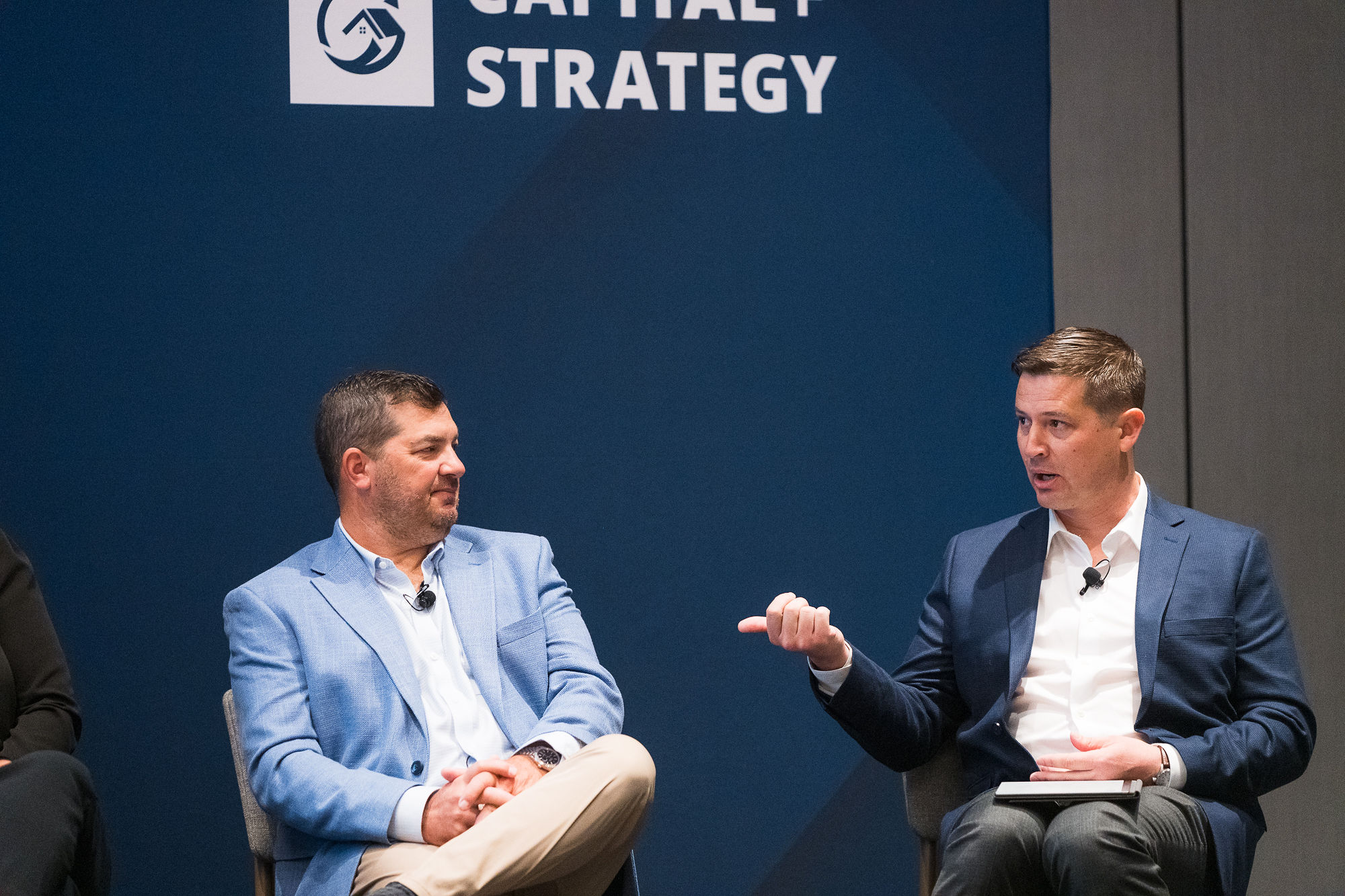
To avoid getting into this situation, buyers must fully evaluate the potential acquisition’s people, Kerns said. Additionally, they must assess an organization’s processes, prioritizing simplification and reducing friction. In this pursuit, technology can help providers to rethink workflows completely, he added.
Headquartered in Dayton, Ohio, the LTM Group is a network of home health, hospice and home care agencies operating in Michigan, Ohio and Indiana – and now Florida. It provides care to about 25,000 patients annually and employs over 1,500 people.
Technology
As technology and AI evolve how home-based care providers operate, implementation has emerged as a key differentiator.
HouseWorks has already seen measurable results from the implementation of technology, Trigilio said. The company rebuilt much of its internal infrastructure across eight states and eliminated 20% of its people and operating costs in the second half of 2025.
In the months since HouseWorks has implemented these shifts, the AI landscape has changed dramatically.
“What’s just amazing is, since then, how much AI is changing the way we can potentially operate,” Trigilo said. “Everything that we thought was possible in June of last year is kind of laughable. Now we’re iterating and changing literally every week what our priorities are with AI. … “This industry is ripe for massive, massive simplification, and it’s now available. Honestly, I don’t ever believe we’ve ever seen anything in home care that can change everything outside of the actual care delivery. … The back office infrastructure and savings are just incredible.”

Avid Health at Home has not seen technology and AI implementation result in the same level of cost reductions; the tools have significantly improved employee satisfaction as the number of manual tasks has decreased, Lentz said.
Technology also plays a key role in M&A. The LTM group built its own internal AI model to evaluate acquisition opportunities. The technology has allowed the organization to evaluate more deals and accelerate the process of finding a suitable partner.
When considering potential acquisitions, sellers’ approach to technology can excite and incentivize buyers, Lentz said.
“That gets us pretty fired up [when] they’re using it differently than we would have thought,” she said.