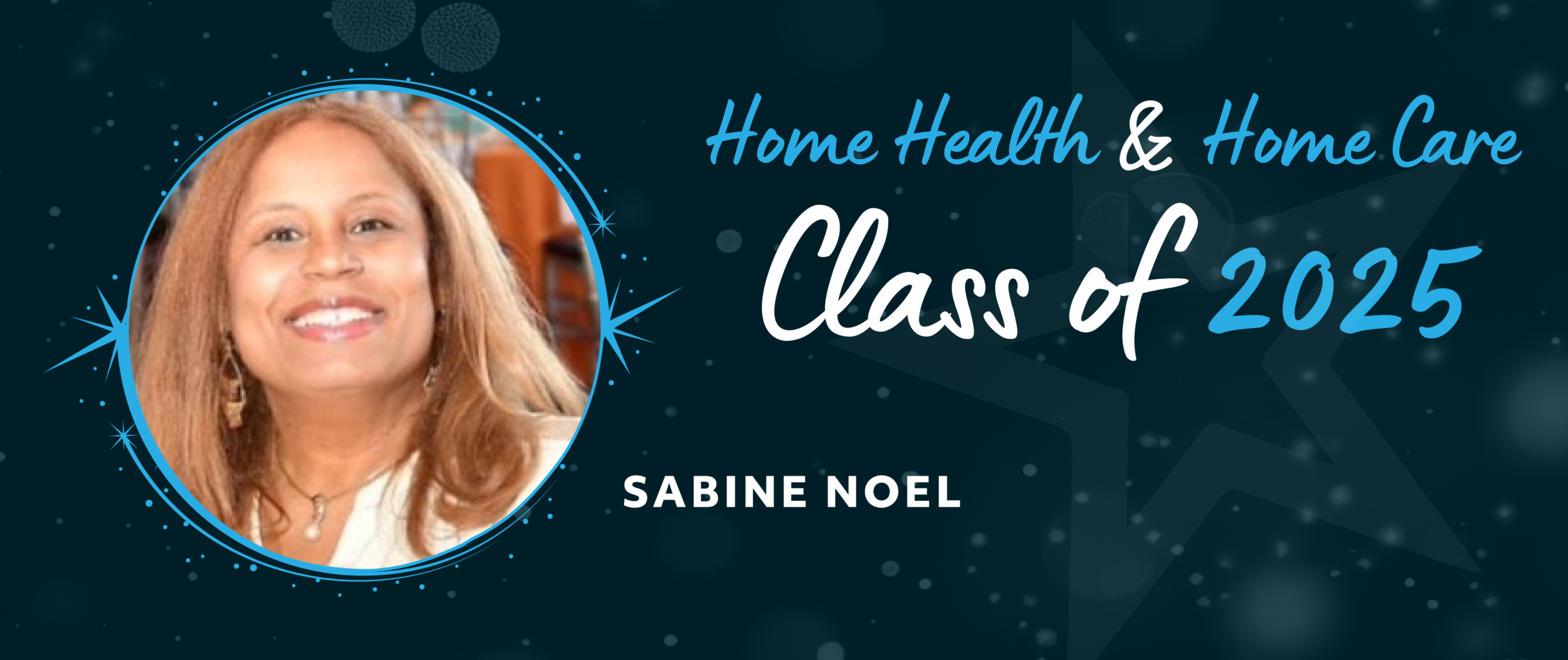
Sabine Noel, Clinical Evaluation Manager, RN at VNS Health, has been named to the Frontline Honors Awards Class of 2025 by Home Health Care News.
To become a Frontline honoree, an individual is nominated by their peers. The candidate must be:
- A dedicated, high-performing frontline worker who delivers exceptional experiences and outcomes
- A passionate worker who knows how to put their vision into for the good of their respective industry, the patients and residents they serve, and their families
- An advocate for their industry and their fellow colleagues
Home Health Care News recently caught up with Noel to discuss her time in the home health & home care industry.
HHCN: What drew you to this industry?
Noel: My path to healthcare comes from personal experience. Before becoming a nurse, I studied business management, but when my niece was diagnosed with diabetes as a child, my whole family was suddenly thrust into an overwhelming, new world. The nurses, dietitians, social workers, and especially the care managers who educated and guided us, made an enormous difference. They didn’t just support my niece; they empowered my sister and our entire extended family, so we had the confidence to manage her condition. Knowing we had a support network that included clinical expertise we could turn to for information really eased some of our worries.
Seeing how coordinated, compassionate care can really impact outcomes inspired me to pursue nursing as a second degree, and I’ve never regretted it for a moment. When I began my clinicals and started working directly with patients, I knew I wanted to give back that same quality of care my family received. Over time, I realized that care management was my true niche — advocating for health plan members, coordinating their needs, and helping them navigate a health system that can be complex at times.
HHCN: What’s a misconception you had about this work before you started – and how has reality differed?
Noel: Before I started, I assumed healthcare was mostly clinical tasks and strict protocols. But as a care manager, I learned that the real work happens through listening and advocacy.
You help plan members live safely and independently in their homes and communities, often through small moments that aren’t immediately visible, but have a deep impact. Progress isn’t always quick. Sometimes it’s hearing a shift in a person’s voice, sensing their relief or gratitude, or empowering them to make decisions with confidence. That’s when you see how meaningful this work truly is.
HHCN: Was there a moment in your career when you realized, “This work really matters”? What happened?
Noel: There have been many, but one plan member in particular stays with me. She was a woman in her thirties who was bedbound, nonverbal, and had been hospitalized for more than a year. Her mother didn’t want her to go to a nursing home because she wanted her daughter to remain in the community and close to her family. I was assigned the case, and it became my responsibility to make that possible. But that wasn’t always easy, as the complexity of this member’s case meant arranging 24-hour nursing, ventilator support, other durable medical equipment, and finding vendors willing to serve her location. It was incredibly challenging.
But I was determined to help this young woman get back to her home and family. There were roadblocks, and many moments that required quick problem-solving, but eventually we successfully transitioned to her home.
I’ve continued to support her for three years since then. My whole team knows her case, and we work constantly to ensure that her services remain uninterrupted to prevent her from being hospitalized. Coordinating care for someone with complex respiratory and chronic conditions requires compassion, persistence, and advocacy, but knowing we honored the mother’s wishes and improved this member’s quality of life is something I’ll never forget. That’s when you see the true impact of care management.
HHCN: What’s the most valuable skill you’ve developed on the front lines that people often overlook?
Noel: Active listening, especially when connecting with people telephonically, is essential. Plan members may call you with fear, frustration, or confusion, and they need space to express themselves without interruption or judgment.
Early on, I learned that if I cut someone off too quickly, that causes them to close down. But when I listen fully, use verbal affirmation, and ask open-ended questions, members open up. Sometimes that means letting someone vent for half an hour, but through that process I learn their immediate needs, their personal history, and how best to support them. That level of understanding builds trust and makes my care more meaningful and effective.
HHCN: What’s one decision leaders make that has a bigger impact on frontline workers than they might realize?
Noel: Active listening matters just as much for leadership as it does in communicating with plan members. At VNS Health, I feel genuinely heard, through surveys, forums, and opportunities to share what truly matters.
When leaders listen and take our feedback seriously, it creates a culture of trust, inclusion, and support. That directly affects morale and engagement and, ultimately, shapes the way frontline staff show up for members. When we feel valued, we bring that same respect and attentiveness back to the people we serve.
HHCN: What’s a simple change – policy, tool, or mindset – that would make frontline work more effective?
Noel: Improved communication across the entire healthcare system would make a tremendous difference. Hospitals, home care organizations, providers, pharmacies, and health plans often use electronic records that don’t actually “speak” to each other. That lack of connectivity can lead to serious issues. For example, there have been times when we discovered that plan members were prescribed duplicate medications under different names because providers aren’t communicating with each other, a mistake that could possibly even send a member to the hospital. Having trained clinicians, with the intuition to know when something doesn’t seem right, and the willingness to find a solution, makes all the difference.
A more integrated system with seamless information-sharing would prevent delays, reduce confusion, and help ensure members receive the right care at the right time. Along with better tools, a flexible and culturally responsive mindset is essential. I really appreciate that my own workplace fosters empathy, agility, and integrity, which helps frontline staff meet our members where they are: emotionally, socially, and culturally, enabling us to provide truly person-centered care.
HHCN: What gives you optimism about the future of this industry, despite its challenges?
Noel: Compared to ten years ago, the progress is extraordinary. There’s a growing shift toward coordinated, patient-centered, community-based care, and that’s exactly what my team prioritizes. We’re seeing more and more collaboration across disciplines, better use of technology, and continuous improvements to documentation systems to enhance communication and care coordination.
There’s also a stronger focus on prevention and education, which empowers plan members and improves long-term outcomes. While we’re not perfect yet, this field is moving in the right direction and that gives me great optimism.
Nursing is my life. For anyone considering this field, I want them to know that care management is a place where you can make an extraordinary impact. Most people receive their care in the community, not in the hospital, and helping members live safely and independently is incredibly meaningful. This work changes lives, and I’m proud to be part of it.